“Wow.”
“This is incredible.”
“This is bumpy.”
“This is steep.”
“This is very steep.”
“I can’t believe I’ve never ridden this way before.”
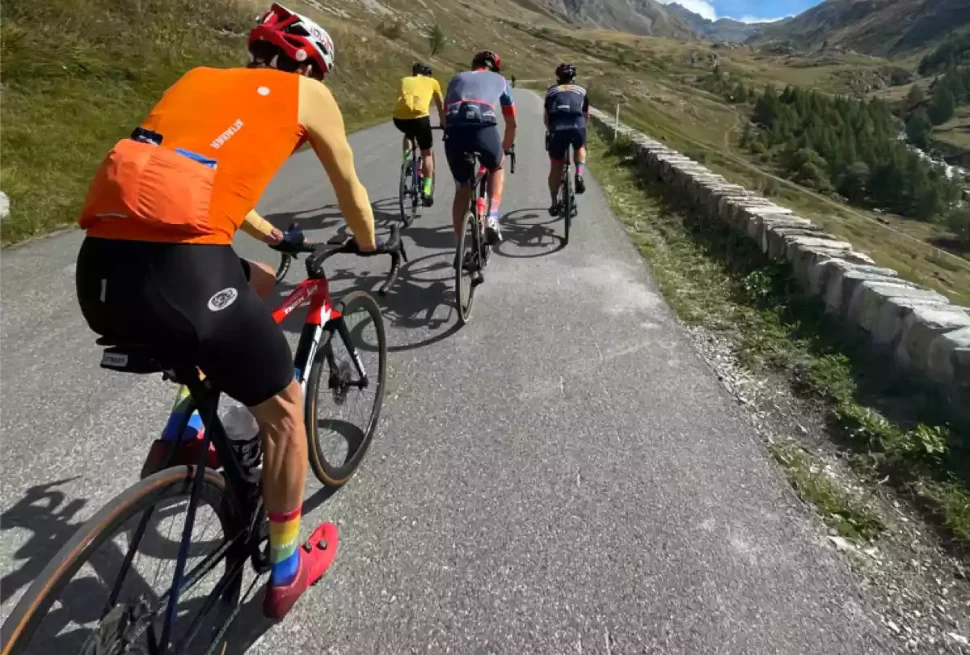
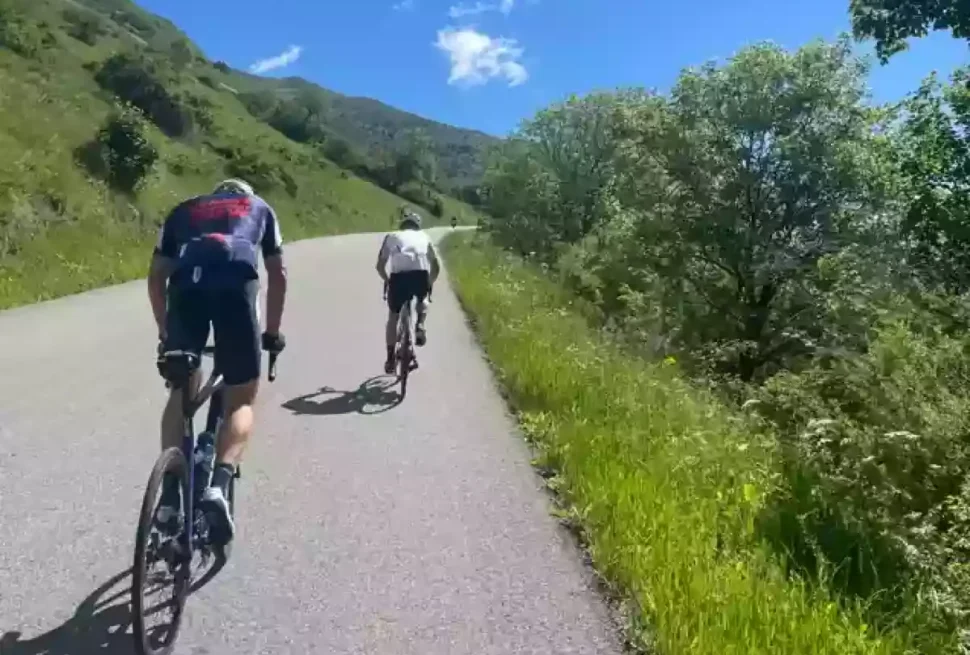
Those were the thoughts running through my head as I climbed Mont Salève on a route I’d never imagined existed, despite living in Geneva for years.
Just a few days earlier, the Tour de France had crossed our local training mountain on Stage 15 on its way to the finish at Plateau de Solaison. The peloton tackled the infamous climb from Le Coin to La Croisette – 4.7 km at an eye-watering 11.2%. It was reassuring, in a slightly cruel way, to see that even the best riders in the world looked like they were suffering.
I watched it all unfold from Portugal while on holiday. As stunning as the beaches were, I couldn’t help feeling a little jealous of everyone lining the roads back home.
When I returned, there was only one place I wanted to ride.
A Different Way Up
Rather than retrace the professionals’ tyre tracks, I headed for the mountain on my gravel bike.
Earlier this year I’d spotted one of my Strava friends riding an intriguing off-road route over the Salève. It had been sitting in the back of my mind ever since, waiting for the right day.
This felt like it.
The route leaves central Geneva by following the Aire River, a familiar stretch that forms part of one of my favourite lunchtime gravel loops. Before long, though, I was leaving familiar roads behind and climbing gently towards the French border at Archamps.
There’s something special about discovering roads and trails you’ve never ridden before, especially when they’re only a few kilometres from home.
Climbing Into the Unknown
Beyond the border the route continued climbing through Neydens towards Le Châble, constantly changing character.
Quiet country lanes became farm tracks. Farm tracks turned into woodland singletrack. Forest trails opened onto gravel fire roads before narrowing back into footpaths.
It was exactly what gravel riding should be.
Apart from the fact that it never seemed to stop climbing.
At Mont Sion the route crossed the main Geneva-Cruseilles road, and the real ascent of the Salève began.
The climb to Saint-Blaise is reasonably civilised, hovering around 6-7%, but once through the village the road wastes no time introducing itself properly.
Double-digit gradients soon became the norm.
Grinding away in my easiest gear, I kept telling myself things would ease once I reached Les Avenières.
They didn’t.
Instead, the GPX file directed me sharply left onto a narrow tarmac lane that somehow managed to get even steeper.
Three hundred metres at 16% is hard on any bike.
On a gravel bike loaded with wider tyres, it felt utterly relentless.
Following the Wrong Rider
Halfway up this savage ramp I was overtaken by another cyclist on a lightweight road bike with skinny tyres.
I admired his optimism.
A minute later the tarmac ended, giving way to rough forest tracks.
Without hesitation he turned around and rolled back down.
I couldn’t help smiling.
A useful reminder: never blindly follow the rider in front. You never know where they’re going.
Into the Forest
Thankfully, once the road became a trail, the gradient finally relaxed.
For the first time in what felt like an age I could increase my cadence, shift into a bigger gear and simply enjoy riding.
This was still my local mountain, yet it felt completely different.
The trail wound through cool woodland before emerging into open alpine meadows where cows grazed peacefully, their bells echoing across the hillside.
There was the inevitable hike-a-bike section – because is it really a gravel ride if you don’t have to push at least once? – before the trail rejoined a broad fire road for the final climb.
Eventually I emerged just below the Col des Pitons.
Across the Top
A short descent on tarmac brought me to the Col de la Croisette, where I topped up my bottles at the fountain.
Only days earlier this had been packed with Tour de France fans cheering on the peloton over the summit.
Now it was quiet.
I assumed the route would simply follow the road towards the Col de Grande Gorge.
It had other ideas.
More Surprises
The GPX track disappeared off to the right onto another trail.
The surprises kept coming.
The descent threaded between farms, bounced over rocky tracks and occasionally slowed to walking pace where pushing the bike was the only sensible option.
There were gates to open and close, rough descents to pick through and constant reminders that gravel riding is rarely about taking the fastest route.
Eventually I rejoined the road near Chalet de Pré-Berger.
From there I enjoyed one of my favourite descents into Monnetier.
At one point I stopped to check whether I had a puncture.
The tyres felt strangely soft.
They weren’t.
I’d simply become so accustomed to floating over gravel on low pressures that smooth tarmac suddenly felt completely different.
One Final Secret
In Monnetier I expected the adventure to be over.
Instead, another unfamiliar turn led me onto a brilliant trail that wrapped around the back of the Petit Salève.
When I reached the Ferme de Château I assumed I’d finally exhausted the off-road options.
Wrong again.
One final left turn – onto a gravel path I’d somehow never noticed before – carried me high above the railway, motorway and main road, gently rollercoastering towards Pas de l’Échelle and the Swiss border.
It was the perfect ending.
Home Again
Back in Veyrier, then through Troinex and beautiful Carouge, it was finally time to leave the gravel behind and spin the last few kilometres home on tarmac.
This ride reminded me why I love exploring close to home.
Even the mountains we think we know best still hold hidden trails, forgotten tracks and completely new adventures.
Sometimes all it takes is choosing the road – or, in this case, the gravel path – less travelled.