Many of you may have read the recent news about Jonas Vingegaard crashing out on a training ride whilst being followed by an amateur rider (If you haven’t you can read about it here). Now of course it wasn’t the amateur’s fault that Jonas crashed, as I’m sure he’s used to descending at high speeds with many other cyclists around him. But that said, having other riders around whose skill levels you don’t know can make you start to second guess yourself, especially when you’re riding at high speeds.
I’ve recently written about our experiences in the Dolomites with a car, but this wasn’t just down to bad driving, it was also the problem of another cyclist behaving provocatively on the descent which antagonised the driver.
There’s always one …
At any popular cycling spot you will usually see someone riding or descending erratically. And this is something we all have to be aware of, for our own safety and that of others. My advice is always to back off, and let them do their thing, and not get involved. The road will always be there, there is always another ride to do, and this is our hobby, not our job and there’s no need to risk our health to prove a point or be faster than someone you’ll likely never see again.
I equate this feeling a little to skiing in the backcountry in the mountains, when you sometimes have to choose to not do that descent you’ve been dreaming of because you know that something is “off”. That might be just a feeling you have, or you’re aware of the snow history and judge the slope too risky, or you’ve dug a snow pit and can see that an avalanche can be triggered. So backing off is the right thing to do, as the mountain will always be there. Better to live to ride another day.
Stranger danger
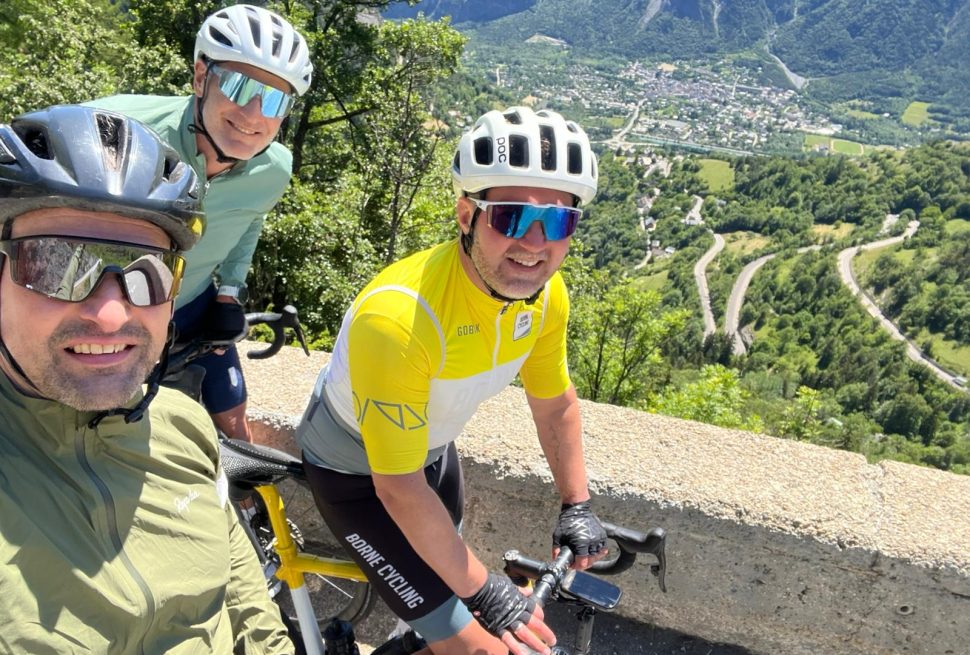
I know that when our Geneva group has ridden in larger events (especially something like the Cyclotour du Léman) we’ve sometimes had instances where other riders have tried to join in our group, and not knowing how we ride, or whether we even want anyone else to join our mini peloton, there’s been some pushback from us to them. Not because we’re anti-social, or mean, just that we don’t know their skill levels, and don’t want any unpredictability when we’re riding at >40km/h. And I think Jonas Vingegaard probably felt this too.
So that said – here are a set of descending tips to help keep you safe when going downhill on your bike
Tips for descending on your bike
Descending is arguably the most technical part of cycling—it’s where the pros make up time and where the rest of us find out exactly how much we trust our tires.
The Setup: Positioning & Body
Your body needs to become part of the bike, not just a passenger on top of it.
- Get in the Drops: This isn’t just about aerodynamics. Being in the drops gives you more control on the brake levers and prevents your hands from bouncing off the bars if you hit a surprise pothole.
- The “Heavy Feet, Light Hands” Rule: Keep your weight in your feet. If your hands feel heavy, you’re leaning too far forward.
- Weight Back: On steep sections, scoot back on your saddle back a few centimetres. This keeps your center of gravity stable and prevents that “over the bars” sensation during hard braking.
- “Noodle” Arms: If your arms are locked, every vibration from the road goes straight to your brain, which triggers panic. Keep those elbows bent and let them act as natural shock absorbers.
The Execution: Braking & Cornering
Cornering is a game of physics. You want to maximize grip while maintaining momentum.
- The 70/30 Braking Rule: Most of your stopping power comes from the front brake. Use the rear for minor speed adjustments, but use the front for the heavy braking before the turn.
- The “Outside Pedal” Anchor: Pushing down hard on your outside pedal (at the 6 o’clock position) does two things: it lowers your center of gravity and physically presses your tires into the pavement for more grip.
- Point Your Knee: As you lean into a corner, point your inside knee toward the apex. Your bike tends to follow your body; where the knee goes, the bike follows.
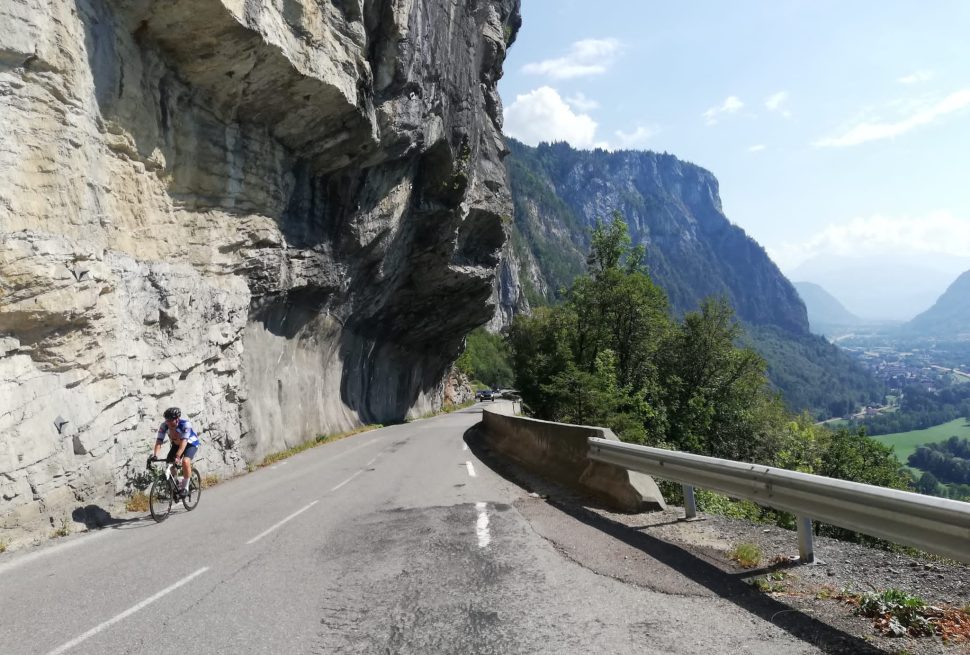
- Look Through the Exit: Your bike goes where your eyes go. If you stare at the guardrail, you’re going to have a very close encounter with that guardrail. Look for the “light at the end of the tunnel.”
A quick checklist
Speed is fun, but skin is better.
Scan Far Ahead – At 40+ mph, a pebble becomes a boulder. Spot hazards early.
Mind the Gap – Give the rider in front of you extra space; you need more reaction time at speed.
Check the Wind – Crosswinds can “buffet” deep-section wheels. Keep a firm but relaxed grip.
Never cross the line – In a blind corner, treat the centre line like a brick wall. Always.
What I’ve been listening to while writing
Arctic Monkeys – Opening Night
A perfect new track from Sheffield’s finest. And for a good cause too. This has been released for the Help 2 album in aid of the War Child charity. There are some cracking songs on the album but any new track from the Arctic Monkeys is worth a listen. Let’s hope there’s more new music coming soon.